What the Sohar notice means in everyday language
When a container arrives at a port, its paperwork should describe what is actually going to happen to the cargo. An import movement normally means goods enter the local customs territory under the applicable import process. A re-export movement means goods that have been imported or placed under a relevant customs procedure are sent onward out of the country, subject to the rules and records that apply. Transshipment is different: cargo is transferred through a port on its way to another destination, without being treated as a local import for a later export movement.
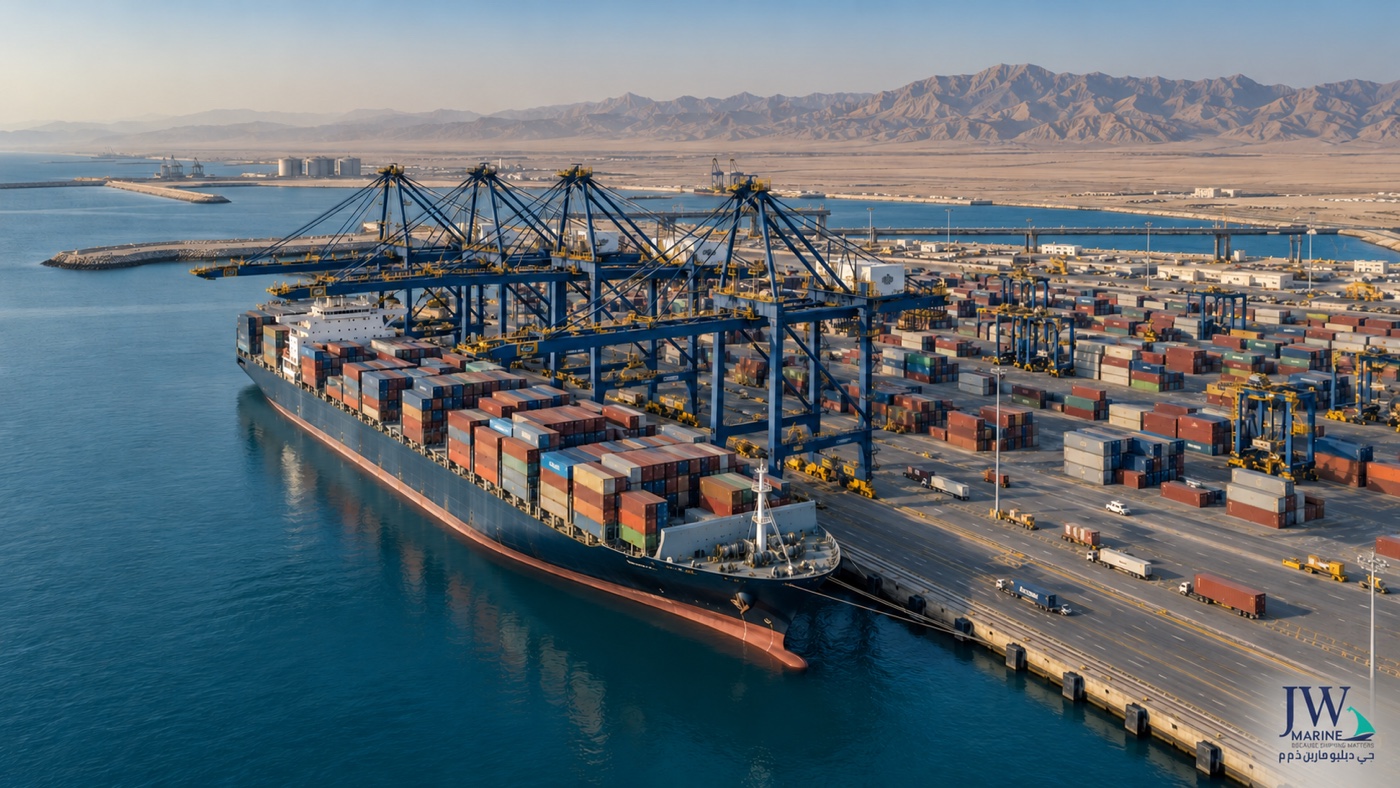
The report from 24 October says OICT is concerned that some cargoes are being handled as import followed by re-export even though, in practical terms, they are using the terminal as a transshipment hub. According to that report, the terminal says this leads to extra yard occupancy and handling, which can take capacity away from cargo serving Oman’s domestic market. Put simply, the terminal wants the paperwork and the physical journey to tell the same story, and it wants space used for cargo that fits the movement declared.
This should not be simplified into “Oman has banned re-exports.” Nor does the report establish that every shipment moving through Sohar is affected. The stated target is the use of import-and-subsequent-re-export declarations for movements intended to function as transshipment. An actual import into Oman followed by a legitimate onward export may involve a different transaction and procedure. The relevant customs treatment depends on the cargo, the parties, the port and free-zone arrangements, the declarations, and current instructions from the competent authorities.
The report describes two operational points. First, carriers are reportedly required to stop arranging import-and-re-export movements when they are being used for transshipment purposes. Second, import containers discharged before the notice and already designated for re-export should, according to the report, be removed or re-exported from OICT no later than 31 October 2026. If a shipment may fall into this group, the carrier and customs representative should confirm its status immediately and in writing. Do not assume that the deadline applies to every container at Sohar or that an extension is available.
The specific OICT circular was not available on the public SOHAR Port notifications page during this review. Treat the deadline and affected container group as details reported by Hannanth, and obtain the current OICT or carrier notice for the specific shipment before acting. This distinction matters because an industry report is useful context, while the terminal or carrier instruction is the operational document a shipper should rely on.
Why the distinction matters
A customs declaration is not just a label on a screen. It connects the cargo to a declared route, a responsible party and supporting records. If the declared movement says one thing while booking instructions, inventory records and the cargo’s actual destination show another, the mismatch can create questions at the terminal or with a customs representative. The exact consequences depend on the rules and facts; a shipper should not assume that a particular document gap automatically means a penalty or seizure.
For a company booking cargo, the practical task is to make the commercial plan, transport plan and customs plan line up before the container is loaded or discharged. Ask whether the shipment is a true import into Oman, a re-export after an Oman import, a free-zone movement, or a transit/transshipment movement. These terms can have different legal and operational meanings. A booking description or a familiar past practice does not, by itself, prove that the same procedure remains available today.
Start by checking the movement with the carrier that accepted the booking. Ask whether it has issued a new instruction for OICT, whether it will accept the proposed declaration, and whether an existing container is among those covered by the reported 31 October deadline. The shipper or consignee should request the carrier’s current instructions in writing, including the applicable service, terminal, dates and any required action. A general customer-service response that does not identify the container or movement may not be enough to plan against.
Next, reconcile the shipping and customs records. The commercial invoice, packing list, bill of lading, import declaration, re-export declaration, inventory or warehouse records, and exit or onward-transport documents should describe compatible goods, parties and destinations. The report itself highlights concern about import-and-re-export use for transshipment, but it does not publish a complete checklist of OICT’s required documents. The list here is a practical file-review aid, not a representation of a new Oman legal requirement.
If the cargo is physically stored or handled in Oman, the records should show where it is held, who controls it, what happened to it and how it left. If the container is moving onward by road, verify that the land leg, border crossing, permits, consignee and delivery arrangements are workable under the selected customs process. A sea booking alone does not confirm the legal or operational availability of an onward road movement.
JW’s freight forwarding service connects sea, air and road freight with documentation and customs coordination. For a shipment that requires a separate customs process, review customs-clearance support and confirm the exact scope with the relevant broker or authority. Where onward road movement is part of the plan, the transportation service page explains the company’s road-freight scope. These pages describe JW services; they do not establish that JW can clear cargo in Oman or at OICT.
A practical check before you book or amend
Use this checklist as a conversation starter with the carrier and the customs professional responsible for the actual declaration:
- Name the movement accurately. Is this an Oman import, re-export after import, transit, or transshipment? Ask the carrier to identify the accepted procedure rather than relying on informal wording.
- Identify the exact container and dates. Record the booking number, container number, date of discharge, current terminal location and planned departure. The reported deadline applies to a defined group of previously discharged containers, not necessarily every movement.
- Get the current instruction. Ask the carrier or OICT for the applicable notice and effective date. If the movement is already in the terminal, ask what action is required and who is responsible for arranging it.
- Match documents to the physical cargo. Check that invoices, packing lists, bills of lading, declarations, inventory records and exit documents match the goods and actual route. Have the customs representative confirm which records are required for this specific procedure.
- Recheck the onward leg. Confirm the next port or border, transport mode, destination party and any permits or restrictions. A route that is physically possible may still need a different customs process.
- Record who approved the plan. Keep written confirmation from the carrier and the responsible customs adviser so that the shipper, consignee and forwarder are working from the same version.
Do not change a customs declaration solely to preserve a booking, and do not relabel a transshipment as an import followed by re-export without confirmation that the procedure accurately reflects the movement. If an existing shipment is affected, escalate early. The terminal’s reported date makes timing important, but the right next step depends on the current instruction and the container’s circumstances.
What this could mean for regional routing
Sohar has drawn attention as regional carriers and traders have reviewed options in response to wider shipping disruption. The Times of India reported in September that feeder services between India and Sohar had risen sharply, citing a port executive. That is useful context, but it is not proof that the October rule was caused by one specific increase, nor does it establish that a claimed “400% surge” applies to every route, period or cargo type.
Likewise, the presence of an onward road leg does not automatically make a port-to-port transshipment an import-and-re-export movement. Route design and customs classification are separate questions. Shippers comparing options can read JW’s existing Duqm alternative-route Insight for the route-planning context, while remembering that each port and customs process has its own rules. JW’s Jebel Ali congestion update addresses a different operational question and should not be treated as evidence of Sohar capacity or availability.
Before choosing a new route, compare the full chain: ocean booking, terminal acceptance, customs status, handling and storage, onward road or feeder capacity, border procedure, final delivery point, insurance and total charges. Ask each provider for current information and a validity period. An alternative is useful only if all the legs can be executed under the correct documents and commercial terms.
The simple takeaway
The reported OICT measure is about preventing an import-and-re-export declaration from being used as a substitute for transshipment. It is not, on the evidence available here, a blanket ban on legitimate re-exports or a universal closure of Sohar to onward cargo. Carriers should confirm new bookings under the current policy; shippers with previously discharged containers should immediately check whether the reported 31 October 2026 deadline applies to them. The primary terminal instruction should be checked before publication and before any cargo decision is made.